
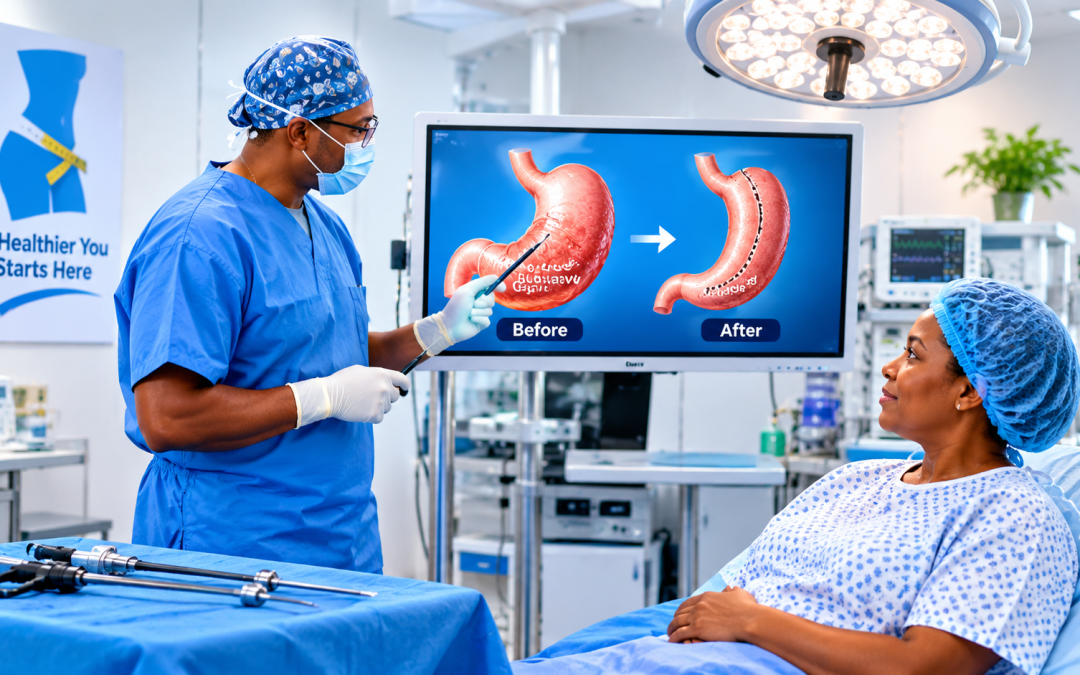
Losing weight can be challenging, especially when diet changes, exercise and other weight-loss methods have not delivered lasting results. For individuals struggling with obesity, gastric sleeve surgery offers a medically guided approach to achieving significant and sustainable weight loss.
But how does the procedure actually work? Does it make your stomach smaller? Does it reduce hunger? And what happens to your body after surgery?
Gastric sleeve surgery, also known as sleeve gastrectomy, is a bariatric procedure that reduces the size of the stomach, helping you eat smaller portions and feel satisfied sooner. It also influences hunger-regulating hormones, making it easier to manage appetite and support long-term weight loss.
In Nairobi, Dr. Lance Mayabi, Bariatric & Endoscopic Weight Loss Specialist, provides personalised weight-loss solutions for individuals seeking effective treatment for obesity.
Here is what you need to know about how gastric sleeve surgery works and what to expect.
What Is Gastric Sleeve Surgery?
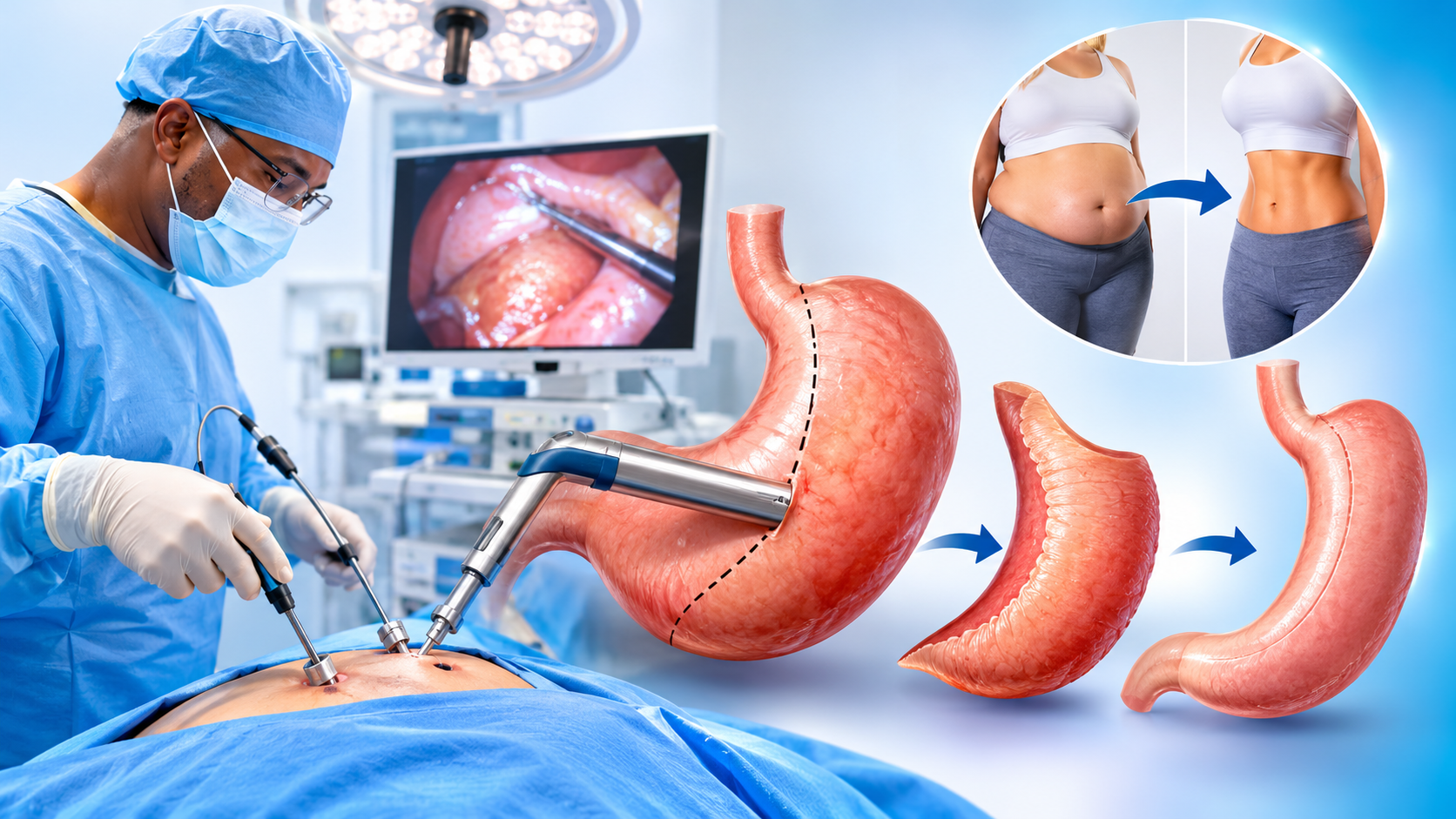
Gastric sleeve surgery is a minimally invasive weight-loss operation that involves removing approximately 75–80% of the stomach, leaving behind a smaller, narrow, tube-shaped stomach.
The remaining stomach resembles a sleeve or banana, which is where the procedure gets its name.
Unlike gastric bypass surgery, gastric sleeve surgery does not involve rerouting the intestines. Food continues to move through the digestive system normally, but the smaller stomach limits how much food you can comfortably eat at one time.
The procedure is commonly performed using laparoscopic techniques, which involve small abdominal incisions and specialised surgical instruments.
How Does Gastric Sleeve Surgery Work?
Gastric sleeve surgery works through two main mechanisms: reducing stomach capacity and changing hunger-related hormones.
1. It Reduces the Size of Your Stomach
During surgery, approximately 75–80% of the stomach is removed, leaving a smaller stomach that can hold considerably less food.
Before surgery, your stomach can accommodate larger meals. After the procedure, you feel satisfied with much smaller portions.
This helps reduce overall food intake and makes portion control easier.
2. It Reduces Hunger
The stomach produces several hormones involved in appetite regulation, including ghrelin, commonly known as the hunger hormone.
By removing the portion of the stomach responsible for producing much of this hormone, gastric sleeve surgery can reduce hunger signals.
Many patients experience reduced appetite and feel satisfied for longer after eating.
3. It Supports Long-Term Weight Loss
The combination of smaller meal portions and reduced hunger makes it easier to maintain a calorie deficit.
Over time, this can lead to significant weight loss, particularly when combined with healthy eating habits, physical activity and regular medical follow-up.
The procedure is not simply about eating less. It helps change the physical and hormonal factors that influence appetite and food intake.
What Happens During Gastric Sleeve Surgery?
Gastric sleeve surgery is generally performed under general anaesthesia using laparoscopic techniques.
The procedure involves several important steps:
Step 1: Anaesthesia and Preparation
You are placed under general anaesthesia to ensure you are asleep and comfortable throughout the operation.
The surgical team prepares the abdomen for the procedure.
Step 2: Small Abdominal Incisions
The surgeon makes several small incisions in the abdomen through which a camera and specialised surgical instruments are inserted.
This allows the surgeon to view the stomach and perform the operation with precision.
Step 3: Removing Part of the Stomach
Using specialised surgical stapling instruments, the surgeon divides the stomach vertically and removes approximately 75–80% of it.
The remaining portion forms a narrow, tube-shaped stomach.
Step 4: Checking the New Stomach
The surgeon checks the staple line and ensures that the remaining stomach is functioning as intended.
Once the necessary checks are completed, the instruments are removed and the small incisions are closed.
The procedure typically takes around one to three hours, depending on individual circumstances and surgical considerations.
How Much Weight Can You Lose After Gastric Sleeve Surgery?
One of the main reasons people consider gastric sleeve surgery is its potential to produce significant weight loss.
Many patients lose approximately 20–30% of their total body weight within the first year to 18 months, although individual results vary.
Your results may depend on factors such as:
-
Your starting weight and body composition.
-
Your eating habits and nutritional choices.
-
Your physical activity levels.
-
Your metabolism and overall health.
-
Your commitment to long-term follow-up care.
Weight loss generally happens progressively rather than immediately. Following your surgeon’s recommendations and maintaining healthy habits are important for achieving lasting results.
What Is Recovery Like After Gastric Sleeve Surgery?
Recovery is an important part of the gastric sleeve journey.
Most patients spend a short period in hospital for observation before returning home, depending on their recovery and medical assessment.
Your diet will gradually progress through different stages as your stomach heals.
These typically include:
-
Liquid diet: You begin with prescribed clear and full liquids.
-
Pureed foods: Soft, blended foods are gradually introduced.
-
Soft foods: You progress to easily digestible foods.
-
Regular foods: You gradually return to a balanced diet, following your bariatric team’s guidance.
You will also need to eat smaller portions, chew food thoroughly and prioritise protein and hydration.
Light physical activity is gradually introduced, with more strenuous exercise resumed according to your surgeon’s advice.
Regular follow-up appointments help monitor your recovery, nutritional health and weight-loss progress.
Who Is a Good Candidate for Gastric Sleeve Surgery?
Gastric sleeve surgery may be suitable for individuals living with obesity who have struggled to achieve lasting weight loss through conventional methods.
Your eligibility depends on several factors, including:
-
Your Body Mass Index (BMI).
-
Your weight-related health conditions.
-
Your medical and surgical history.
-
Previous weight-loss attempts.
-
Your readiness to maintain long-term lifestyle changes.
A medical assessment is necessary to determine whether gastric sleeve surgery is appropriate for you.
During your consultation, Dr. Lance Mayabi can assess your health, discuss your weight-loss goals and explain the most suitable treatment options.
Gastric Sleeve Surgery vs Endoscopic Gastric Sleeve: What Is the Difference?
Although they have similar names, laparoscopic gastric sleeve surgery and endoscopic gastric sleeve procedures are different treatments.
Laparoscopic Gastric Sleeve Surgery
This is a surgical procedure in which approximately 75–80% of the stomach is permanently removed. The remaining stomach is reshaped into a narrow sleeve.
Endoscopic Gastric Sleeve (ESG)
This is a non-surgical procedure performed through the mouth using an endoscope equipped with a specialised suturing device. Stitches are placed inside the stomach to reduce its capacity without removing stomach tissue.
Both procedures aim to support weight loss, but they differ in technique, recovery and suitability.
The best option depends on your individual health needs and weight-loss goals.
Learn more about Endoscopic Gastric Sleeve in Nairobi.
Why Consider Gastric Sleeve Surgery with Dr. Lance Mayabi in Nairobi?
Choosing the right bariatric specialist is an important part of your weight-loss journey.
Dr. Lance Mayabi is a Bariatric & Endoscopic Weight Loss Specialist in Nairobi, specialising in laparoscopic and endoscopic procedures designed to help patients manage obesity.
His approach focuses on understanding each patient’s health needs and recommending appropriate treatment options.
When considering gastric sleeve surgery, patients benefit from:
-
Individualised medical assessment and treatment planning.
-
Minimally invasive surgical techniques.
-
Professional guidance throughout recovery.
-
Nutritional and lifestyle support.
-
Continued monitoring of weight-loss progress.
Whether you are exploring gastric sleeve surgery or other medical weight-loss treatments, the first step is understanding which option is right for you.
Explore bariatric surgery options in Nairobi to learn more.
Start Your Weight-Loss Journey with Expert Guidance
Gastric sleeve surgery can be an effective treatment for obesity, helping patients reduce food intake, manage hunger and achieve significant weight loss.
However, successful long-term results depend on choosing the appropriate procedure and maintaining healthy habits after surgery.
If you have struggled with weight loss and want to explore a medically guided solution, Dr. Lance Mayabi can help you understand your options.
Book a consultation with Dr. Lance Mayabi, Bariatric & Endoscopic Weight Loss Specialist in Nairobi, and take the first step towards a healthier future.
📍 The Karen Hospital, Nairobi, Kenya
📞 0780 310 990